


Certification Program
- It aims to promote healthy eating habits.
- It is distributed free of charge to all citizens who sign up for the Base Plan

1. Strategic Framework
Healthy eating certification has become a key competitive differentiator in the restaurant sector. In a context where consumers, companies and public institutions increasingly value nutritional quality, certified restaurants position themselves as leaders in responsibility, innovation and wellbeing.
The certification strengthens three essential pillars:
- Consumer trust
- Institutional credibility
- Sustainable competitive advantage
2. Importance for Society
- Promotion of public health — contributes to reducing chronic diseases associated with poor dietary habits, aligning with national and European health‑promotion policies.
- Safer and healthier food environments — ensures consistent nutritional and food‑safety practices, reinforcing consumer protection.
- Nutrition education — supports informed choices by enabling the public to identify establishments committed to higher nutritional standards.

3. Importance for Restaurants
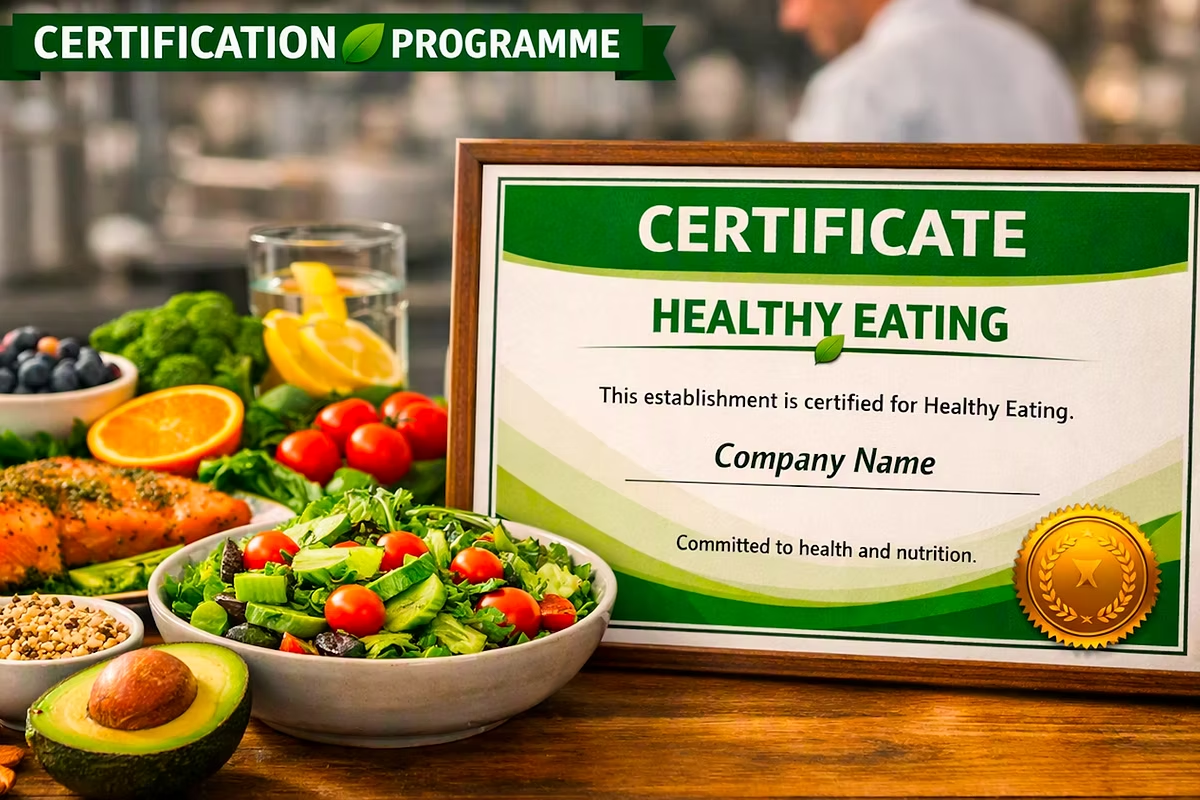
- Immediate competitive differentiation — the certification seal acts as a recognised marker of excellence valued by customers, companies and institutions.
- Enhanced reputation and trust — demonstrates commitment to health, sustainability and social responsibility.
- Operational improvement — integrates best practices in nutrition, food safety, staff training and monitoring.
- Access to new market segments — families, companies, schools, public entities and premium clients increasingly seek certified establishments.
4. Structure of the Certification Programme
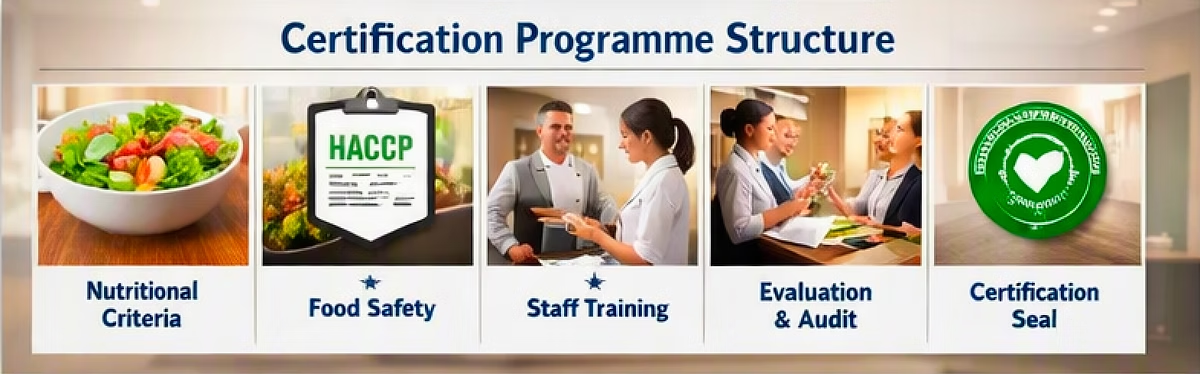
The programme is built on five corporate pillars:
Pillar 1 — Nutritional Criteria
- Assessment of the nutritional quality of meals
- Reduction of ultra‑processed foods
- Balanced macronutrient composition
- Availability of healthy options throughout service
Pillar 2 — Food Safety
- Integration with recognised standards: HACCP, ISO 22000, FSSC 22000
- Hygiene procedures, traceability and risk control
- Legal compliance and regular audits
Pillar 3 — Staff Training
- Training in nutrition, healthy cooking techniques and customer communication
- Continuous and certified professional development
- Internal culture oriented towards health and quality
Pillar 4 — Evaluation and Audit
- On‑site and documentary audits
- Verification of nutritional and operational criteria
- Compliance reports and improvement plans
Pillar 5 — Certification Seal
- Official seal awarded upon compliance
- Annual validity with renewal audit
- Institutional communication and integration into marketing campaigns


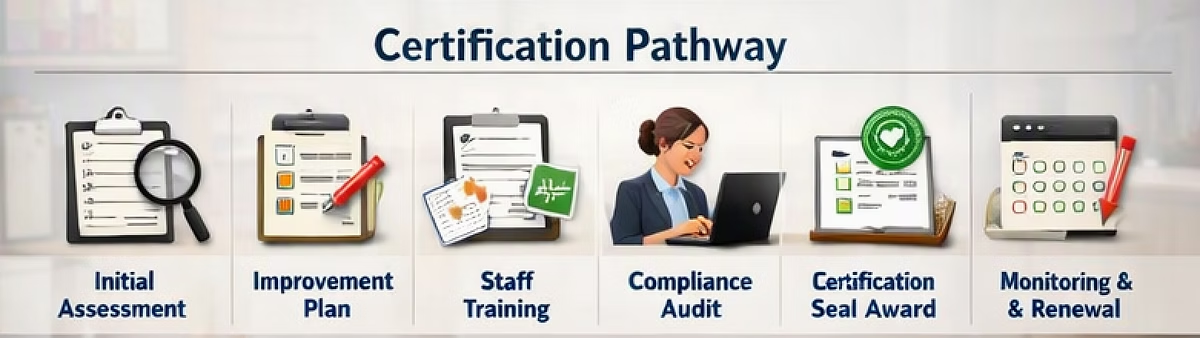

5. Certification Pathway (Corporate Timeline)
- Initial Assessment — nutritional and operational evaluation of the restaurant
- Improvement Plan — definition of mandatory and recommended actions
- Staff Training — implementation of training modules
- Compliance Audit — final verification of criteria
- Certification Seal Award — official communication and integration into the certified network
- Monitoring and Renewal — annual audit and updating of practices